

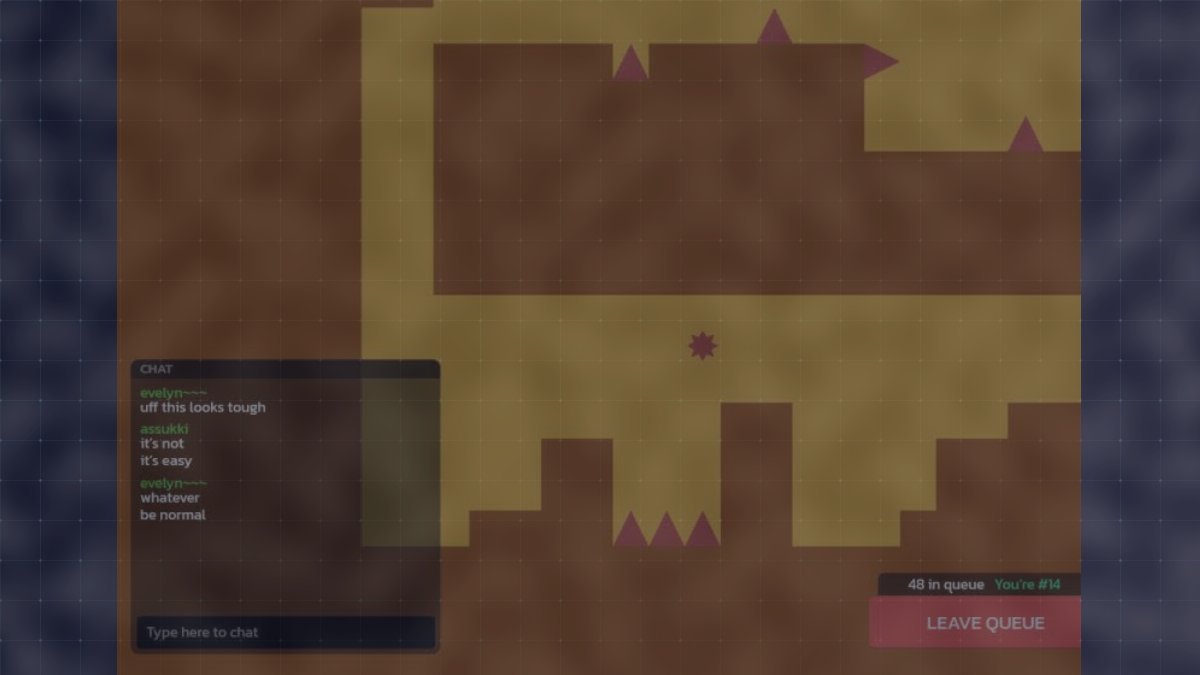
While many online titles brag about packing 100 strangers into one map, Jono takes the opposite approach. The free pixel platformer reached Steam earlier in the month with a single playable hero shared by everyone on Earth. Installing it does not grant immediate control; players join a queue and wait for their turn. That turn lasts one minute, during which the person at the front guides the small sprite beyond hazards such as ice, portals, crushers and spikes. When time expires, the next person in line continues from the same spot.
- Key Point: Jono is a free Steam release built around one worldwide character, with each player receiving a 60-second window of control.
- Key Point: More than 540 participants contributed over 85,000 messages to the shared chat across the game’s first 17 days.
- Key Point: One dedicated player has completed more than 7,500 rooms, yet the community’s stated target is one million unique rooms.
- Key Point: Tuomas Erikoinen, an artist on the original Angry Birds who now works solo as Part Time Monkey, designed the shared avatar as a deliberate obstacle to imitation.
Queue turns into a live audience
Nobody in line stares at an empty screen. Waiting players watch the active run through a stream-like view embedded in the game, and they can cheer, jeer or fill a common chat with emotes aimed at whoever holds control. The queue therefore functions as a social space rather than idle downtime.
Erikoinen explained in a Reddit post that he thinks the game itself pulls people in, but the chat is what persuades them to remain. The numbers support that view: in only 17 days, more than 540 players sent over 85,000 messages.
Cheap deaths leave warnings behind
Failure is inexpensive. When the hero dies, Jono returns to the beginning of the current room; no one’s progress is erased. Every death also leaves a gravestone, so the most difficult rooms gradually collect markers that show the next player which jumps to avoid. Trial and error costs little for the person in control and gives those behind a visible record.
A procedural generator supplies most of the rooms. Erikoinen also inspects player-made stages by hand, checking them against the creators’ replays, before selecting some for the route ahead. Stages judged too punishing for ordinary play are moved into an optional Meat Grinder mode. One level in that mode required 2,627 deaths and nearly five hours before someone finally cleared it.
A single avatar as copycat defense
The shared queue originated as protection against imitators. According to the developer, artificial intelligence has made modest games look simple to produce, and he has already seen viral indie successes copied within hours of taking off. A crowd of strangers operating one character is much more difficult to clone. In this design, the hardest feature to replicate is not code but coordination.
The worry is not isolated. Over roughly the past week, several independent developers have withheld titles from public view ahead of release, mainly because AI-produced clones appear within days of a concept going viral. Alliance Arts, for example, withdrew the open demo of Drunken Goddess Reflux, its horror-themed drinking game, and now runs closed sessions only.
Jono’s stated destination is one million unique rooms. A single highly committed player has cleared more than 7,500, a total that makes only a small difference. With roughly 5,000 rooms being cleared daily, Erikoinen expects the group to arrive at room one million sometime around April; he has kept secret what waits there. The project’s pull comes from scarcity: one minute of control watched by thousands. That scarcity lends weight to each turn, while conversation supplies those in line with an incentive to linger. If April arrives with the milestone met, the question will be whether the audience remains for the shared spectacle once the finish line is no longer ahead.