

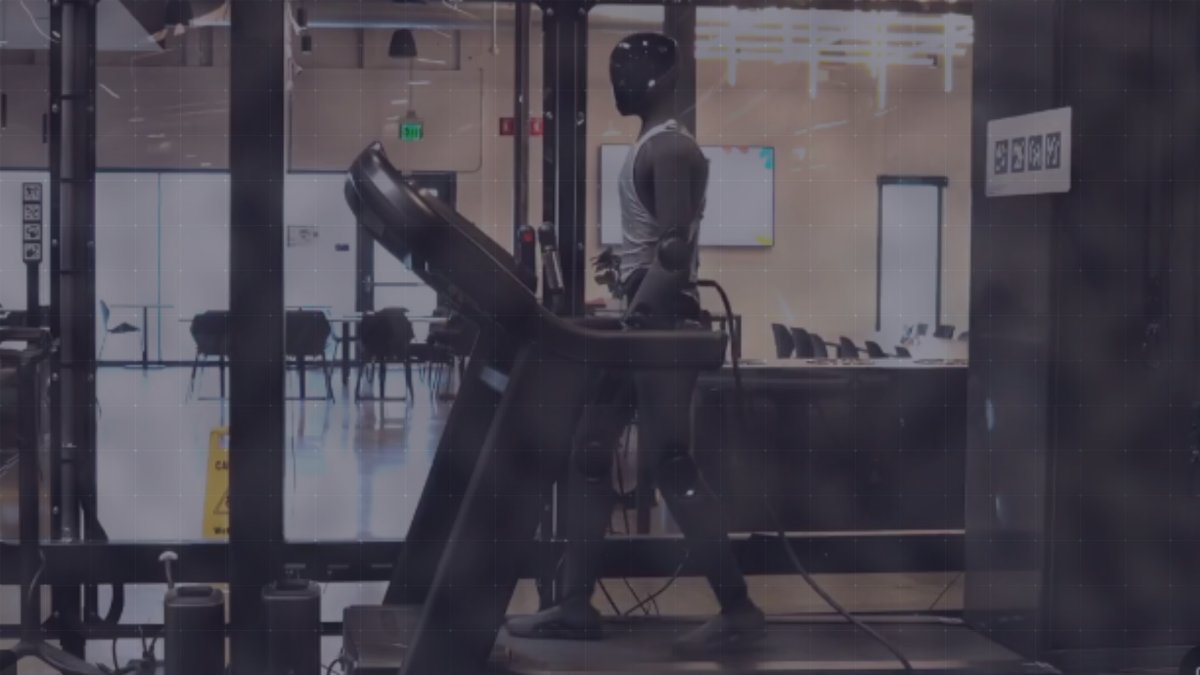
The United States robotics developer Figure AI has put its Figure 03 humanoid through a nine-day treadmill marathon, a run the company says produced roughly 560 kilometers of walking and about 1.2 million steps. Brett Adcock, the company’s chief executive, disclosed the figures in a post on X. Rather than a brief stage demo, the exercise was built around one question: can a bipedal machine keep moving, and keep itself upright, for days at a time?
On a treadmill, the answer appears to be yes. But the limits of that claim matter as much as the number, because a controlled walking loop is a long way from a home, a shop floor or a warehouse aisle.
- Key Point: Figure 03 walked for nine consecutive days on a treadmill, covering approximately 560 kilometers and logging around 1.2 million steps.
- Key Point: CEO Brett Adcock shared the results on X, presenting the run as evidence of the machine’s physical durability.
- Key Point: The trial was a controlled treadmill exercise and does not show that the robot can work for nine days in real settings or keep every function active throughout.
- Key Point: Figure AI has not published the full technical conditions of the experiment, so the result reads as a specific endurance check rather than proof of unlimited autonomy.
What the endurance run does and does not establish
Long demonstrations are useful precisely because they expose things a short clip cannot: how a system behaves after hours of continuous activity rather than minutes. Keeping a humanoid walking means juggling motors, sensors, balance mechanisms and control software at once, while managing wear on components and the power budget so the machine does not simply stop.
What the trial did not do is test the rest of the job. Figure 03 walked on a treadmill, a fixed and predictable surface, and the run says nothing about navigating cluttered rooms, gripping objects or switching between tasks on its own. The company has also held back on the full technical parameters of the experiment, which makes the outcome a durability datapoint rather than proof of round-the-clock operational autonomy.
Cameras in the palms and a model called Helix
Unveiled in October 2025, Figure 03 was designed with households and commercial spaces in mind. Its perception stack combines cameras, including sensors set into the palms of its hands that feed extra visual information during a grasp, so the robot can tighten or adjust its hold and notice when an object is starting to slip. A vision system is meant to let it steer its movements quickly, alongside navigation and fine manipulation.
The body uses soft materials and foams of different densities to spread pressure at contact points, a design choice that matters if the machine is to share space with people. An upgraded audio system supports real-time spoken conversation, and the robot can dock at a charging station and top itself up without a human helping.
Overseeing perception and action is Helix, an AI model developed in-house at Figure AI. The point of that layer is to turn what the robot sees into physical work: recognizing an object, working out how to hold it and adapting when the surroundings change.
Repetitive work, not just walking
Walking is only one part of the pitch. Figure AI has previously shown its humanoid picking packages off a conveyor belt over several days, a task that exercises manipulation and the handoff between sensing and movement rather than locomotion alone. Those skills would decide whether a machine like Figure 03 is useful in a workplace, and they fell outside the scope of the treadmill run.
For now, the nine-day walk stands as a demonstration of mechanical stamina from a company that has staked much of its marketing on endurance and repetition. What would move the claim further is disclosure of the test conditions and evidence from less forgiving environments: real floors, real obstacles and multi-day duty cycles that mix walking with actual work.