

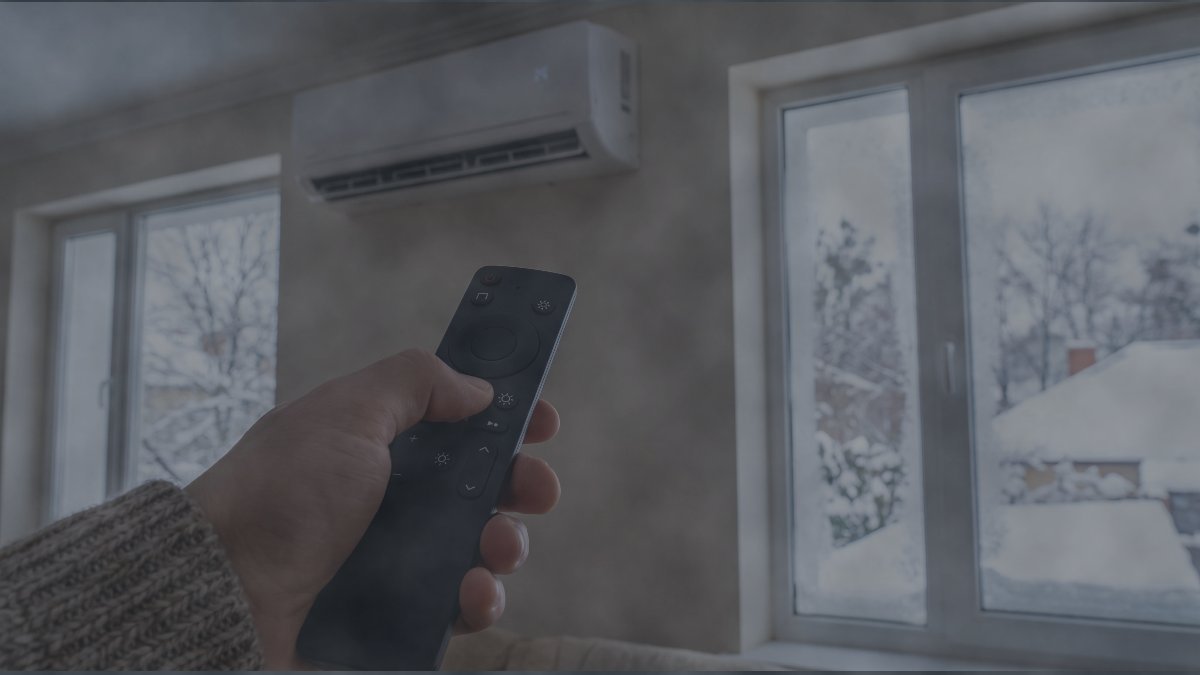
When winter temperatures drop, households often go looking for extra heating options. Many modern air conditioners already carry a second function that can do the job: a reversible heat pump mode that flips the usual cooling cycle and warms the room instead, sparing owners the cost of buying a separate heater.
- Key Point: Heat pump mode is built into a large share of current air conditioning systems, according to manufacturers such as Midea, and lets one unit both cool and heat.
- Key Point: The function is switched on with the “Mode” button and is usually marked by a sun icon or the word “HEAT”.
- Key Point: Recommended indoor temperatures run from 19 °C to 22 °C (66.2 °F to 71.6 °F) in living areas, with cooler settings advised for bedrooms.
- Key Point: Not every model includes a heat pump, and clogged filters or a wrong mode setting are common reasons the unit blows cold air.
How the reversible cycle works
In cooling mode, the equipment pulls warmth out of the room and releases it outdoors. Heating mode runs that process in reverse. The system collects thermal energy from the outside air, even when it is cold, and moves it inside the home.
The compressor and the heat exchanger cooperate to gather that outdoor heat and spread it evenly through the room. Newer units add a feature that pushes the warm airflow downward, which helps keep the temperature more consistent across the space.
Steps to turn on the heating function
Start by powering up the unit and making sure it is not still set to cooling. The mode can be changed from the remote control or from the panel on the equipment itself.
Next, find the button labeled “Mode” and pick the heating option, which normally appears as a sun symbol or the word “HEAT”. After that, set the temperature to a level that feels comfortable.
The unit may need a few minutes before warm air starts coming out, since it has to adjust its internal circuit and reach the chosen setting. Reading the user manual is worthwhile, because the behavior of this function differs between manufacturers and models. If the device does not respond as expected, checking the configuration and confirming that heating is actually available solves most problems.
Choosing a temperature that keeps bills in check
Setting the right temperature matters for comfort without unnecessary electricity use. For shared rooms during the day, a range of 19 °C to 22 °C (66.2 °F to 71.6 °F) is recommended, warm enough to stay comfortable without excessive power draw.
Bedrooms call for slightly lower values, between 16 °C and 19 °C (60.8 °F to 66.2 °F), which support better rest and lower energy demand overnight. Bathrooms, where thermal comfort tends to come first, can be set between 22 °C and 24 °C (71.6 °F to 75.2 °F).
Every degree above those ranges raises the unit’s electricity consumption. Staying within the suggested values helps control the power bill and avoids overworking the equipment.
Why the unit may refuse to heat
One frequent cause of a unit that will not switch to heating is that the model simply lacks the capability. Not all air conditioners carry a heat pump; some older or entry-level units offer cooling only. The energy label or the technical manual will confirm whether both modes are supported.
A wrong setting on the control panel is another common culprit. Raising the temperature does nothing if the system is still configured for cooling.
Blocked air filters can also interfere, since they restrict airflow and cut efficiency. A clogged filter may leave the unit blowing cold air or failing to reach the desired temperature, which makes regular inspection and cleaning an essential part of keeping the system working properly.
The heat pump approach matters beyond convenience: it lets a single appliance cover both seasons, and the temperature discipline it requires is the same lever that determines how much the household spends on electricity. Owners who confirm their model’s capabilities and keep filters clean can get through the cold months without adding a second heating device.