

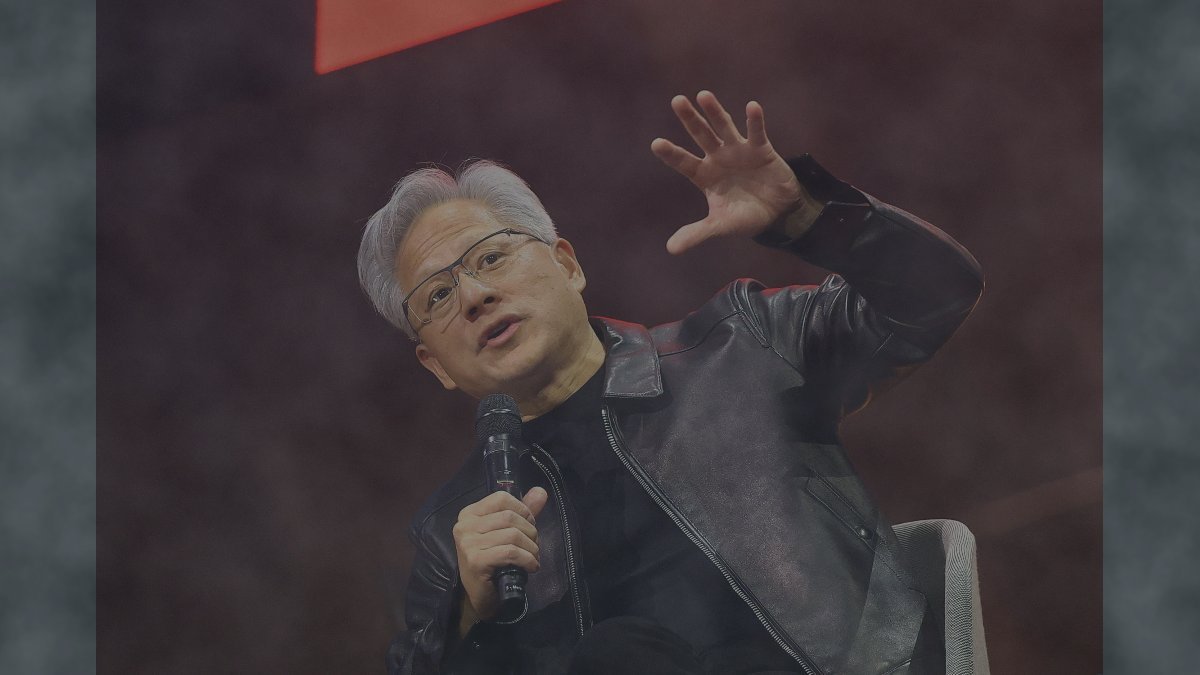
Investors have taken Nvidia and its chief executive, Jensen Huang, to federal court in San Jose, California, alleging the company misled shareholders by keeping quiet about the CEO’s ties to Alice Huang, an executive whom U.S. authorities reportedly regard as a Chinese intelligence agent. The class action, led by shareholder Mark Kistenmacher, seeks unspecified damages. It was filed five minutes after the market closed, and the same session ended with Nvidia shares down 4.3 percent, a slide that erased roughly USD 190 billion from the chipmaker’s market value.
- Key Point: The complaint alleges Nvidia and Jensen Huang gave misleading information about Megaspeed and failed to disclose that the relationship posed a national security risk.
- Key Point: The proposed class covers investors who bought Nvidia stock between October 9, 2025, and November 8, 2026.
- Key Point: Nvidia’s board opened an independent investigation on Sunday, November 8, run by directors unaffiliated with management and advised by outside counsel.
- Key Point: Investors seeking to serve as lead plaintiff must ask the court before January 8, 2027.
What the complaint targets
Alice Huang, who is not related to the CEO, worked as an executive at Megaspeed, a data-center company based in Singapore. According to the filing, Jensen Huang told Nvidia employees that he had been unfaithful to his wife but did not detail the relationship. The suit argues that the connection carried a national security risk for the company’s reputation and business, and that shareholders should have been told about it.
The complaint also takes aim at Nvidia’s public statements about Megaspeed. It cites the company’s October 2025 explanation of its review of the firm, which said Megaspeed had no Chinese shareholders and showed no signs of chip diversion. It further challenges a spokesperson’s description of the Megaspeed arrangement as ordinary and customary.
Two provisions of federal securities law underpin the case: one covering false statements or omissions, and another that holds Huang liable as a controlling person of the company. Nvidia stock closed at USD 178.67 on the Monday in question, down USD 7.97 a share.
Legal scholars see a familiar fraud theory
Robert Bartlett, a professor at Stanford Law School, described the company’s earlier statement as “clearly misleading” and noted that a chief executive’s knowledge is attributed to the firm. He characterized the claim as a standard market-fraud suit, in which investors argue they paid prices shaped by false or incomplete information.
The legal theory does not depend on what the internal investigation uncovers about Huang’s private life.
Such cases, Bartlett added, typically stretch over years and end in settlements paid by the company and its insurers, without personal consequences for the executive. Because the matter is civil, Huang does not face prison.
Bartlett also expressed doubt that the Securities and Exchange Commission would step in, given President Donald Trump’s support for Huang. Separately, the Los Angeles firm Schall, Brown & Schwartz and others, including Levi & Korsinsky, announced investigations on the same Monday. An announced investigation, on its own, does not establish that a case is strong.
Board inquiry and what comes next
Nvidia’s board launched its independent review on Sunday, November 8, assigning it to directors with no ties to management and backing them with external lawyers. In a statement, the board said it had no reason to believe that national security or the company’s trade secrets had been put at risk.
The litigation now moves into the early procedural phase, where a judge will weigh competing bids for lead plaintiff before the January 8, 2027, deadline and, eventually, whether the case survives a motion to dismiss. For Nvidia, the exposure is less about the private conduct at the center of the claim than about how carefully the company described its Megaspeed dealings to the market. Any finding that those statements were misleading would touch the governance and disclosure practices that underpin investor confidence in the world’s most valuable chipmaker, at a moment when its commercial ties in Asia are already under close scrutiny.