

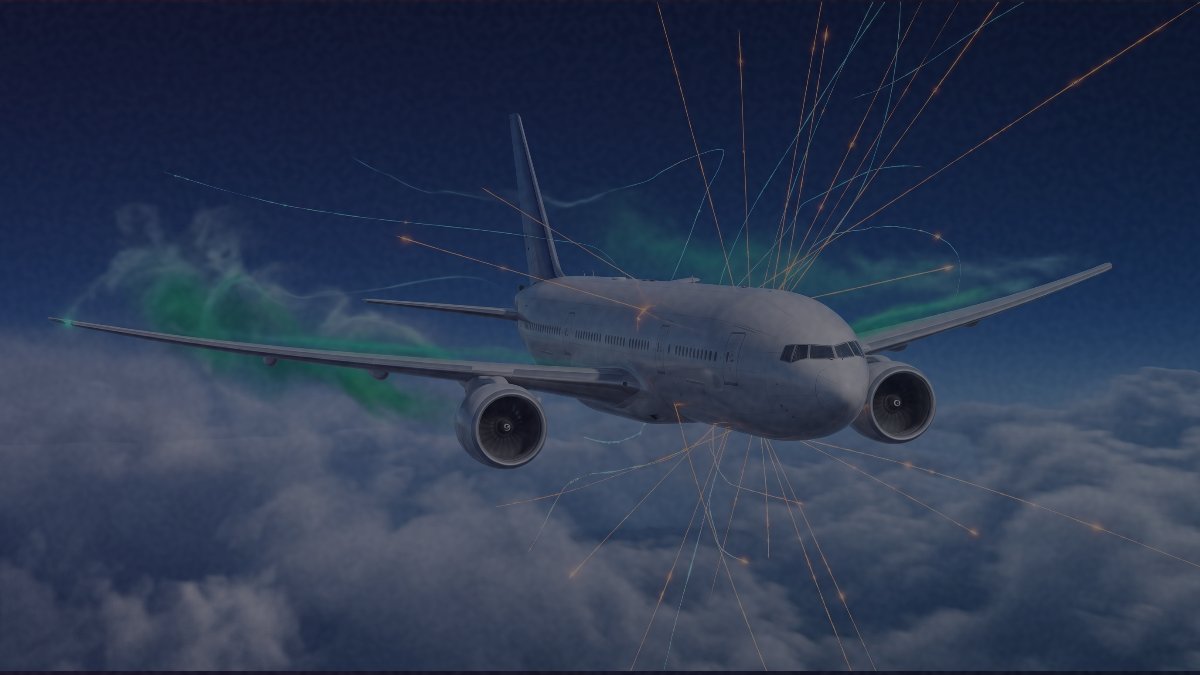
A powerful solar eruption on November 11, 2025 pushed radiation through the atmosphere to the ground and gave researchers a rare chance to test how well aviation warning systems track such events. An international sensor network coordinated by the University of Surrey found that exposure levels climbed past safety limits on some high-altitude routes while standard protocols raised no operational warning. The results, published in Space Weather, suggest that computer models alone may understate the risk facing crews and aircraft electronics.
- Key Point: The X5-class eruption produced the strongest atmospheric radiation pulse in nearly two decades.
- Key Point: Balloons launched from the Shetland Islands measured exposure above the International Civil Aviation Organization’s moderate limit at 14,600 meters and beyond its severe threshold at 18,000 meters.
- Key Point: A Boeing 777 flying London to New York recorded a 42.6 percent rise in accumulated ionizing radiation dose compared with identical trips under normal conditions.
- Key Point: Sensors in northern Britain logged more than 1,000 percent above normal cosmic-ray levels, while balloons released in southwest England and De Bilt in the Netherlands showed no significant change.
A campaign built to fill a data gap
Until now, assessments of how solar storms affect flight safety rested largely on theoretical simulations. Without direct physical readings taken during an event, researchers could not calibrate the real doses involved, leaving open questions about health risks for frequent flyers and about the resilience of onboard instruments. To close that gap, the Surrey-led team deployed detectors from ground level up to stratospheric balloons as the storm peaked.
The instruments lifted from the Shetland Islands delivered the sharpest findings. At the altitude used by business jets, exposure passed the moderate ceiling set by the International Civil Aviation Organization. Higher still, at the 18,000-meter band associated with supersonic travel, readings crossed the organization’s severe threshold. No routine advisory flagged the condition.
“The first balloon launch from Lerwick recorded an extraordinary radiation environment in the upper atmosphere,” said Fraser Baird, a study co-lead and researcher at the Surrey Space Centre.
Baird pointed to the strong geographic variation of these events and argued that coordinated monitoring is needed to gauge aviation risk.
Wide swings in dose across short distances
The measurements showed how unevenly the storm behaved. Detectors in northern Britain recorded cosmic-ray levels more than 1,000 percent above normal, yet balloons sent up from southwest England and from De Bilt in the Netherlands saw no meaningful deviation. That disparity, tied to position and altitude, complicates any single regional warning.
Commercial traffic told a similar story of rapid change. A Boeing 777 on the London-New York transatlantic route logged a 42.6 percent increase in cumulative ionizing radiation dose relative to the same journey in calm conditions. Cabin levels stayed below danger limits, but the instruments showed particle flux rising quickly along the corridor.
Scientists combined the balloon readings with data from four ground-based neutron stations on British territory.
“Having all those systems working together during the largest radiation increase seen in almost twenty years gave us a unique data set and the most complete picture we have had of this phenomenon,” said Ben Clewer, a space weather researcher at the University of Surrey.
Toward alerts that combine models and real measurements
Aviation advisory schemes today lean heavily on theoretical simulations fed by satellite and ground observations. The study concludes that such models carry limits on their own and need in-flight physical readings to sharpen operational risk estimates and protect crews and equipment.
The campaign also demonstrated that rapid sensor launches are feasible once a solar disturbance is detected from the ground. Linking terrestrial stations with stratospheric balloons lets the hazard be tracked within minutes, which could give airlines room to reroute aircraft or temporarily lower cruise altitude over affected areas.
“This is the first time radiation data have been collected through the atmosphere during a space weather event in this way, which represents a big scientific leap and will make a real difference to our forecasting capability,” said Krista Hammond, space weather manager at the Met Office, the British weather service.
With microelectronics vulnerable to failures triggered by energetic particles, the researchers propose installing permanent sensors on commercial navigation systems. The aim is a rapid-response network that can warn airlines in real time before a larger storm catches aircraft mid-flight. Whether regulators and operators adopt such instrumentation will determine how quickly the gap between modeled and measured risk narrows.