

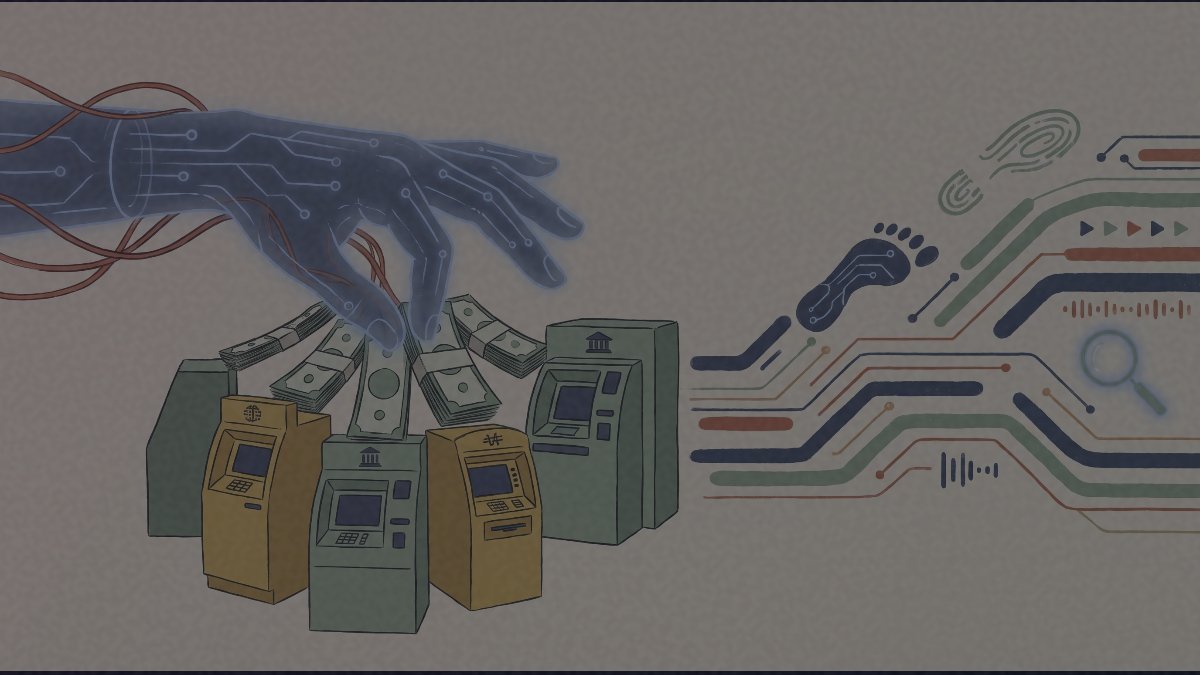
Singapore plans to give banks a common intelligence layer for spotting fraud that hops between lenders, with five institutions already feeding transaction data into shared AI models. Deputy Prime Minister Gan Kim Yong, who also chairs the Monetary Authority of Singapore, unveiled the effort on November 18 at the Singapore FinTech Festival, which runs through November 20.
- Key Point: Five banks are already pooling transaction data so AI models can flag suspicious flows that no single lender could see on its own.
- Key Point: MAS will begin a design study early next year for a sector-wide service Gan called the Scam Detection Utility.
- Key Point: Two other national AI missions target credit access for small businesses and payments made by autonomous AI agents.
- Key Point: The shared scam system will initially cover only accounts and data inside Singapore, with cross-border cooperation possible later.
Why a single bank cannot see the whole trail
Gan framed the problem around speed and fragmentation. Criminal proceeds rarely stay put, and the institution that first receives a fraudulent transfer usually sees only one link in a chain that stretches across several lenders within minutes. When each bank examines only its own slice, the wider pattern stays hidden and intervention comes too late.
“Scams do not stop at the boundaries of a single bank,” Gan said. “A victim’s money can pass through several institutions in minutes.”
The live trial is designed to close that gap. Data from participating banks is gathered in a secured form so that AI models can surface suspicious movement earlier and give institutions a chance to act before funds disappear. That pilot is meant to lay the groundwork for the sector-wide utility, whose planning, governance and operating model MAS will study starting early next year.
The authority had outlined the trial on May 4 alongside the government’s technology agency and the Singapore police. Under that arrangement, account numbers are encoded so that only the bank contributing the data can identify them, and the information is deleted once the trial ends. Gan said the system could eventually open the door to cooperation with other countries, since scams ignore national borders.
Credit for small firms and money spent by AI agents
The second mission addresses how small and medium-sized enterprises obtain financing. Gan said many lenders judge a business by its payment history and demand personal guarantees, a formula that shuts out younger companies with thin track records or few assets. The plan pulls together bank account data, invoices, payment records and public registers that today sit scattered and are hard to assemble.
Singapore will invite AI companies to test their tools against synthetic data, meaning records generated artificially rather than drawn from real customers, and will ask SMEs whether the resulting products match their needs. Gan said AI could bring down borrowing costs.
The third mission examines how AI agents, software that carries out tasks on its own, can make payments and purchases for people and companies. One concept would let an agent settle a contract automatically once agreed conditions are verified, using funds earmarked for that specific purpose.
“Greater autonomy must come with clear accountability,” Gan said.
Agents would have to operate within defined limits, and institutions and companies would remain answerable for what those agents do on their behalf, he added.
What comes next
The Future of Finance Institute, an industry body, will coordinate all three missions with companies, researchers and public agencies. The financial sector accounts for roughly 14% of Singapore’s economy and employs about 200,000 people, which gives the initiative unusual weight for a national AI program.
The confirmed next step is MAS’s design study, due at the start of 2027. The announcement also lands as new U.S. export restrictions on advanced AI chips raise questions about whether Singapore can secure the computing capacity its AI ambitions require. How the shared scam utility balances detection speed against the privacy safeguards built into the pilot will shape whether other jurisdictions follow the model.