

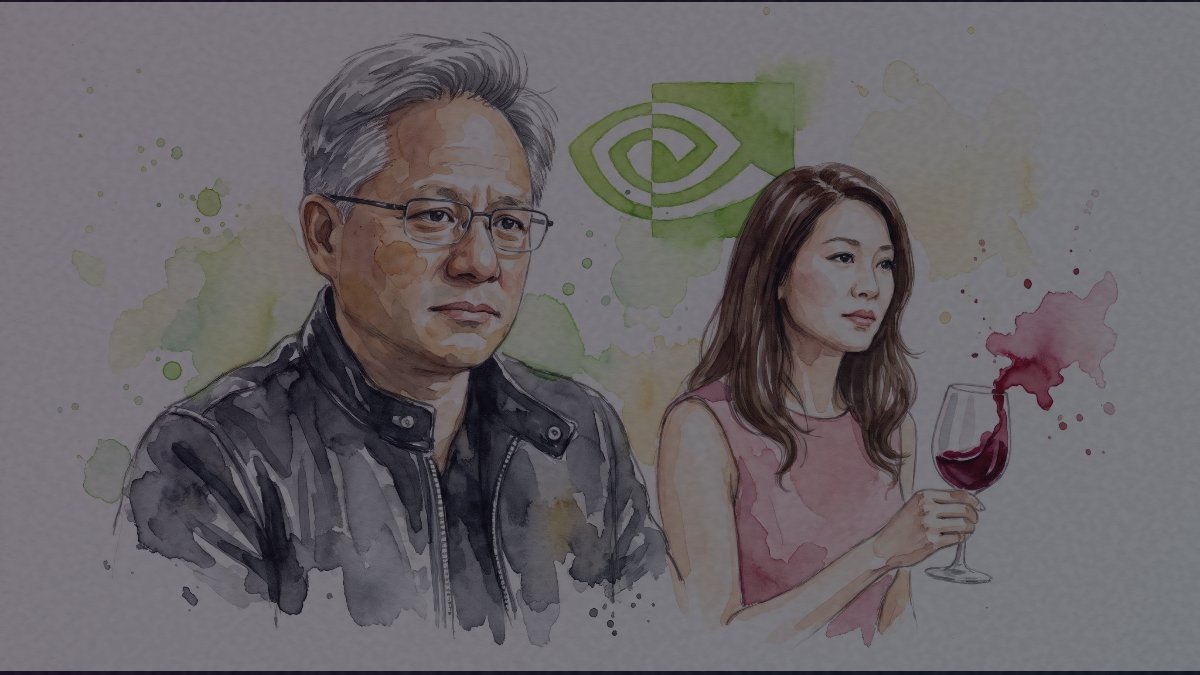
Nvidia’s board of directors has launched an independent investigation into chief executive Jensen Huang after he acknowledged an extramarital relationship with a former executive at a Singapore-based data center company, Alice Huang, whom U.S. intelligence regards as a suspected Chinese agent. The 63-year-old founder of the world’s most valuable AI chipmaker confirmed the affair in a message to employees, and the company’s stock dropped 5% on Wall Street the following day. Alice Huang, a Chinese citizen, has not been charged with any crime and is not related to the CEO.
- Key Point: Jensen Huang admitted in a note to staff that he was unfaithful to his wife, and the board has kept him as CEO while an independent probe proceeds.
- Key Point: Alice Huang is a former executive at Megaspeed, a Singapore data center firm spun off from Chinese group 7Road that has been a major buyer of Nvidia chips.
- Key Point: Nvidia shares fell 5% as the disclosure became public, with no obvious successor identified inside the company.
- Key Point: U.S. intelligence has not established that Alice Huang was recruited by Beijing, passed Nvidia information or that Jensen Huang knew of any such activity.
The people and companies at the center
Jensen Huang built Nvidia into the dominant supplier of the processors used to train artificial intelligence models, a position that has made the company a linchpin of the global AI buildout and its chief executive one of the most closely watched figures in technology.
Alice Huang is a Chinese national and a former executive at Megaspeed, the Singapore-based data center operator created in 2023 as a spin-off from the Chinese group 7Road. The company was established months after Washington tightened restrictions on sales of advanced chips to China. In late 2024, the U.S. Commerce Department began investigating Megaspeed over the possible diversion of chips into China.
Nvidia has also retained Heller, a crisis communications consultancy, to handle Huang’s public relations, a relationship that began roughly a year before the admission became public.
How the story unfolded
The two Huangs were first photographed together in June 2024 at a party following a conference in Taipei. A second photo surfaced from a private dinner in Taipei in May 2025. On October 9, 2025, reporting on the Megaspeed investigation and the pair’s connections became public, a development that irritated the CEO.
Later that month, Nvidia instructed that Heller be included in every press inquiry concerning Huang. Between October and December 2025, Huang sought White House permission to sell Blackwell chips in China and did not obtain it. In December, President Donald Trump authorized exports of the less powerful H200, with 25% of sales going to the government.
In spring 2026, Secretary of State Marco Rubio oversaw a classified memo warning about the personal relationship between Huang and Alice Huang, while the Justice Department took the lead on the investigation. Between May and October 2026, Huang traveled to China with Trump, took a live call from him on the All-In podcast and, on October 8, received the National Medal of Science.
On October 29, 2026, it emerged that U.S. intelligence believed Alice Huang to be a Chinese agent with a close relationship to the CEO. Nvidia responded at the time that meeting with customers is part of a chief executive’s job. On November 6, the government’s view that the tie was romantic became public.
Two days later, Huang wrote to employees:
I was unfaithful to my wife. There is no excuse for what I did.
The board then opened its independent investigation and confirmed that Huang would remain CEO for its duration. Asked about the situation, Trump said Huang should stay on, describing him as “an honorable guy.”
What is established and what is not
The confirmed facts are narrow: Huang acknowledged the relationship, the board is investigating, and the share price fell 5%. It has not been shown that Alice Huang was recruited by Beijing, that she obtained information from Nvidia, or that Huang was aware of any intelligence concern. China has dismissed the allegation as unfounded.
The disclosure lands at a delicate moment for Nvidia, whose valuation rests on continued demand for its AI accelerators and on access to export markets that Washington controls. Huang is scheduled to present quarterly results on November 17 with the investigation still open, giving investors their first direct opportunity to press management on governance and succession. The board’s findings, and whether the inquiry expands beyond the relationship itself, will determine how much of the episode stays a personal matter and how much becomes a corporate and national-security one.